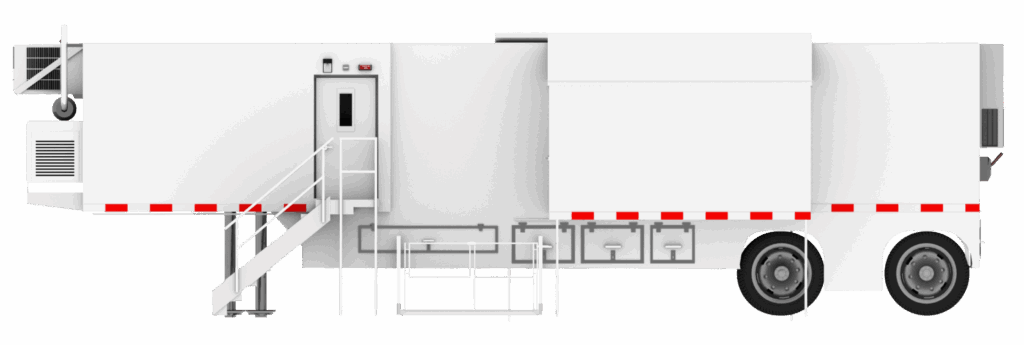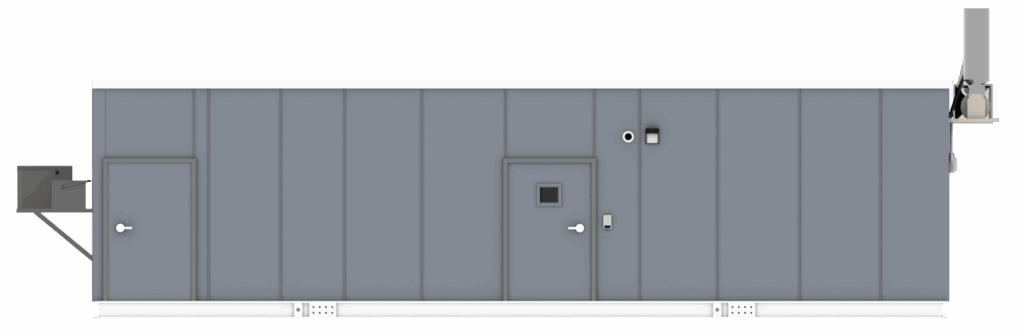
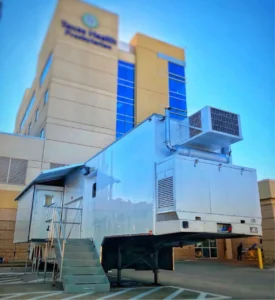
Healthcare systems are under constant pressure to move faster—more patients, more complexity, and higher expectations for timely care. Imaging and interventional services are often where that pressure shows up first. When capacity falls short, the impact is immediate: longer wait times, delayed diagnoses, postponed procedures, and growing strain on both staff and patients.
The challenge isn’t deciding whether to expand capacity. It’s determining how to execute quickly and efficiently, without overextending resources or committing too early to long-term infrastructure.
The solution: mobile imaging.
The Capacity Challenge
Demand for MRI, CT, and minimally invasive cardiac and vascular procedures continues to grow. Aging populations, expanded screening programs, and advances in interventional care are all contributing to higher volumes. At the same time, building new imaging suites or cath labs requires significant capital, long timelines, and available space—three things that aren’t always aligned.
In the meantime, schedules fill up, backlogs grow, and departments are forced to make trade-offs.
What Mobile Imaging and Cath Labs Offer
Mobile MRI, CT, and cath lab units provide a way to expand capacity quickly. Instead of waiting months—or longer—for construction and installation, organizations can deploy fully functional units in a matter of days.
These units are designed to integrate with existing operations and can be scaled up or down based on need. Their value comes from flexibility as much as speed.
They can help organizations:
- Maintain continuity during equipment downtime or replacement
- Support operations during renovations or expansions
- Manage short-term spikes in volume without long-term commitments
- Extend services to locations that may not support permanent infrastructure
- Evaluate demand before investing in fixed facilities
Mobile cath labs extend these benefits into the procedural space, allowing hospitals to continue cardiac and vascular cases even when existing labs are unavailable or at capacity.
Many healthcare organizations partner with specialized providers such as Siemens Healthineers, GE HealthCare, or Philips, as well as dedicated mobile imaging companies that maintain large fleets of MRI, CT, and cath lab units. These providers offer flexible access models, including short-term rentals—often with immediate availability—as well as longer-term placements. This allows hospitals and health systems to quickly scale capacity without the need for upfront capital investment or long-term commitments, making mobile solutions a practical and accessible option for both urgent needs and strategic planning.
When Mobile MRI, CT, or Cath Labs Make Sense
Certain scenarios highlight the advantages more clearly.
When a scanner or cath lab is taken offline, mobile units help avoid disruptions and keep schedules intact.
During construction or upgrades, they provide a practical bridge that maintains throughput.
When volumes exceed current capacity, they offer immediate relief—reducing bottlenecks without requiring permanent expansion.
For systems exploring new markets or service lines, mobile units provide a lower-risk way to test demand and refine workflows.
And, in areas where patient volumes are more variable, they offer a way to deliver advanced services without overbuilding.
A More Flexible Approach
One of the key shifts here is moving away from a purely fixed model of care delivery. Traditionally, imaging and interventional services have been tied to permanent, centralized infrastructure.
Mobile solutions introduce a more flexible layer—one that can be adjusted as needs change. That might mean supporting a temporary surge, maintaining operations during a transition, or bringing services closer to where they’re needed for a period of time.
It’s not a replacement for permanent infrastructure, but it does add another tool for managing demand more effectively.
Things to Consider
Successful mobile deployments require planning. Site logistics, power access, staffing, and system integration all need to be addressed upfront. For cath labs, additional considerations include procedural flow, sterile environments, and recovery space.
Patient experience should also remain consistent, even in a mobile setting.
When these elements are aligned, mobile MRI, CT, and cath labs can operate with the same level of quality and efficiency as fixed installations.
Looking Ahead
Healthcare delivery is becoming more dynamic, and capacity planning is evolving with it. Relying solely on fixed infrastructure can make it difficult to respond quickly to changing demand.
Mobile imaging and cath labs offer a practical way to stay flexible—helping organizations manage growth, navigate transitions, and maintain continuity without overcommitting resources.
In a landscape where timing and adaptability matter, that flexibility can make a meaningful difference.
Learn more about Modular Devices’ mobile and modular imaging solutions: https://www.modulardevices.com/imaging/