As cardiovascular volumes continue to rise and procedures increasingly shift toward outpatient and decentralized care settings, hospitals and cardiology centers are under pressure to expand or protect cath lab capacity—often without the time, capital, or disruption associated with traditional construction.
Two of the most common temporary cath lab solutions today are mobile and modular cath labs. While both provide fully functional catheterization environments, they are designed for different operational needs, timelines, and site conditions.
Understanding the differences between mobile vs modular cath lab options is critical for choosing the right solution for your facility.
What’s the Difference Between Mobile and Modular Cath Labs?
At a high level, the distinction comes down to structure, mobility, and integration.
What Is a Mobile Cath Lab?
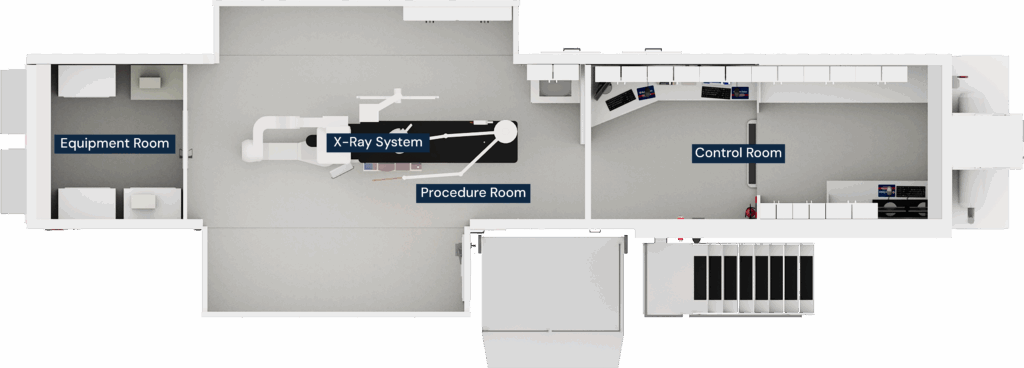
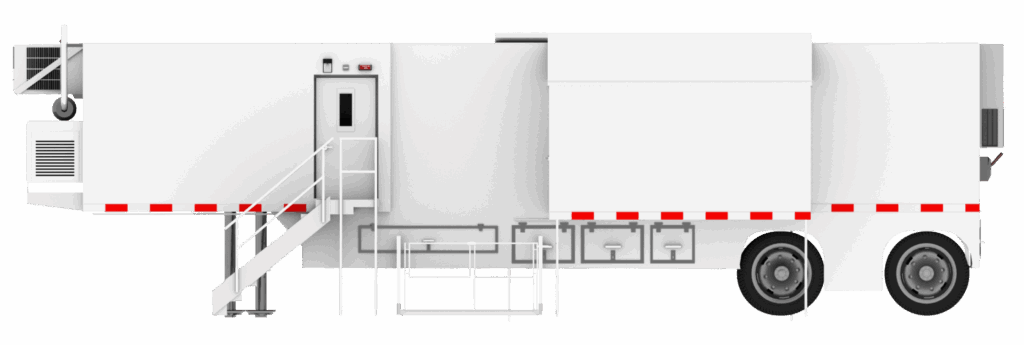
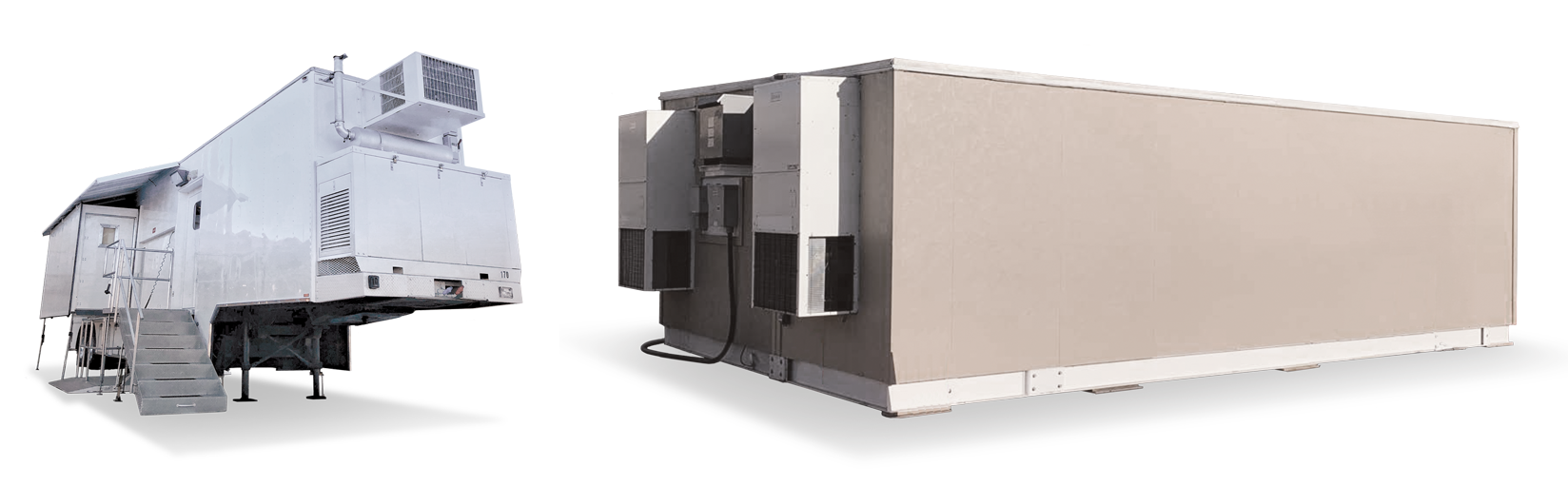
A mobile cath lab is a fully equipped cardiac catheterization lab housed within a vehicle-mounted trailer. These units are delivered to a healthcare facility, parked on site, and connected to the existing facility’s utilities for the duration of the lease.
Once installed, a mobile cath lab functions as a complete extension of the hospital or ASC’s cardiovascular department without requiring permanent construction.
Mobile cath labs are commonly used when speed, flexibility, and short-to-medium-term deployment are priorities.
What Is a Modular Cath Lab?
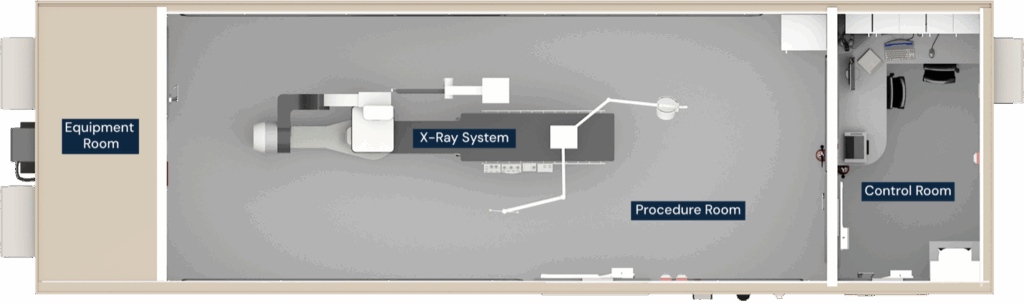
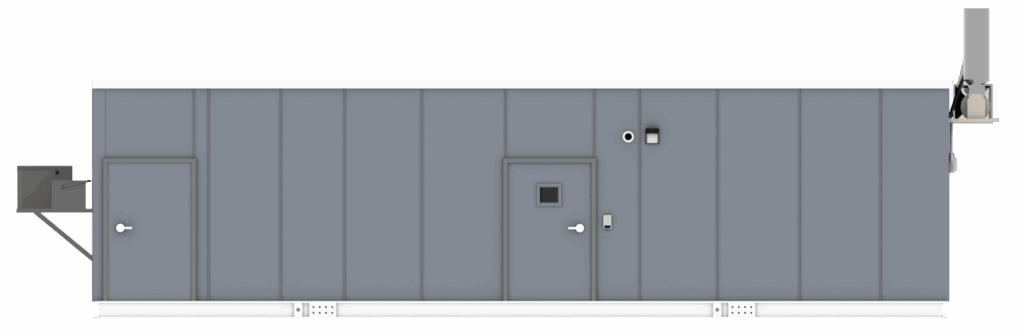
A modular cath lab is a relocatable building structure constructed off-site and delivered for installation on a prepared foundation. Unlike mobile units, modular cath labs are not vehicle-mounted and do not retain wheels once installed.
These buildings are designed to integrate more closely with existing facilities and often feel indistinguishable from traditional brick-and-mortar spaces once delivery and integration are complete.
Modular cath labs are typically used when longer-term capacity expansion or deeper facility integration is required.
Pros and Cons: Mobile vs Modular Cath Labs
Both cath lab design options oIer distinct advantages depending on your clinical, operational, and site requirements. Understanding how mobile and modular cath labs diIer across deployment speed, space, infrastructure, and integration helps facilities choose the right solution for their needs.
Speed to Deployment
Mobile cath labs
- Delivered and installed in days, not months
- Minimal site preparation and permitting
- Ideal for urgent capacity needs, renovations, equipment downtime, or volume surges
Modular cath labs
- Delivery within two weeks due to site prep, foundations, and installation
- Best suited for planned expansions and long-term growth strategies
Space and Layout Flexibility
Mobile cath labs
- Standard size is 8’ x 48’ (15’ x 48’ with pop-outs)
- Fixed trailer dimensions designed for efficiency
- Optimized layouts that support standard cath, EP, and IR procedures
- Proven workflows without the complexity of custom construction
Modular cath labs
- 14’ x 48’ with 400+-sq.-ft. procedure rooms
- Ground-level entry through 4-foot doors, eliminating lifts or ramps
- Greater flexibility to support complex workflows, staff circulation, and equipment needs
Shielding and Infrastructure
Mobile cath labs
- Integrated radiation shielding engineered into the trailer
- Built to meet regulatory and safety requirements as a turnkey solution
- OEM-installed imaging systems with standardized configurations
Modular cath labs
- Shielding customized to room size, equipment, and layout
- Infrastructure designed to support future equipment upgrades or service line expansion
- More flexibility for evolving clinical needs over time
Integration with Existing Facilities
Mobile cath labs
- Typically connected via temporary corridors or walkways
- Minimal disruption to existing buildings and operations
- Ideal when permanent integration is not required
Modular cath labs
- Can be fully integrated into existing facilities
- Often connected directly to internal hallways and departments
- Creates a long-term extension of the cardiovascular service line
Common Use-Case Scenarios
Understanding how facilities use these solutions in real-world settings can help clarify which option fits best.
Disaster Response & Emergency Capacity
Mobile cath labs are often the preferred choice during:
- Natural disasters
- Equipment failures
- Unexpected surges in patient volume
Their rapid deployment makes them ideal for quickly restoring or maintaining services.
Renovations and Equipment Replacement
Both options are commonly used during:
- Cath lab renovations
- Equipment upgrades
- Temporary shutdowns of existing rooms
Mobile cath labs work well when the renovation timeline is defined and relatively short. Modular cath labs may be better for multi-year projects or phased expansions.
Outreach Clinics and Access Expansion
Mobile cath labs are frequently used to:
- Extend services to underserved or remote areas
- Support temporary programs or pilot initiatives
- Expand access without permanent construction
Modular cath labs may be selected when outreach locations are intended to become long-term service sites.
Choosing the Right Cath Lab Design Option
There is no one-size-fits-all solution when comparing mobile vs modular cath lab solutions. The right choice depends on:
- Speed to deployment
- Length of use
- Site constraints
- Desired level of integration
- Budget and capital strategy
For many organizations, mobile cath labs provide the fastest and most flexible solution. For others, modular cath labs offer the space, customization, and permanence needed for long-term growth.
Whether you’re planning for renovation coverage, expanding cardiovascular capacity, or exploring new service lines, choosing the right cath lab solution is critical.
Modular Devices Imaging specializes in both mobile and modular cath lab solutions, helping hospitals and ASCs evaluate site requirements, timelines, and operational goals to determine the best fit.
Contact our team to discuss your facility’s needs and explore which cath lab design option is right for you.