As imaging demand continues to rise, hospitals and health systems face increasing pressure to maintain access to diagnostic services while managing staffing constraints, aging infrastructure, construction timelines, and capital limitations. mobile CT and MRI scanners are a proven flexible solution for hospitals, health systems, and outpatient imaging providers seeking to maintain quality, reliability, and patient care while managing capacity constraints.
Once viewed primarily as short-term or emergency resources, mobile imaging units now play a strategic role in long-term planning—supporting capacity expansion, operational continuity, and access to advanced imaging across diverse care settings.
What is a Mobile CT or MRI Scanner?
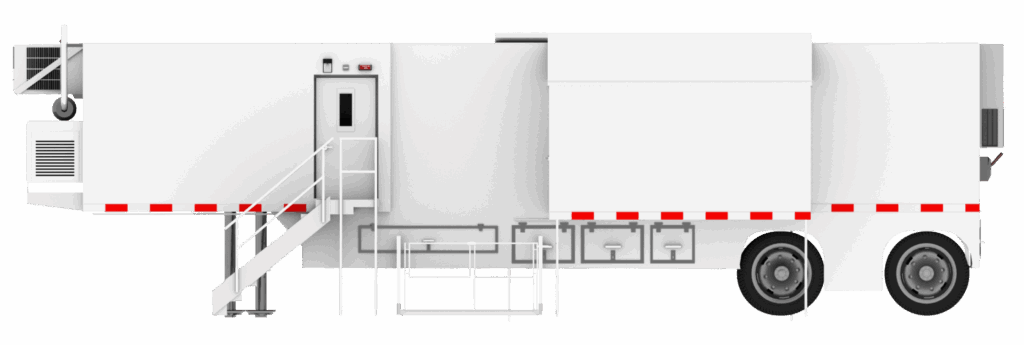
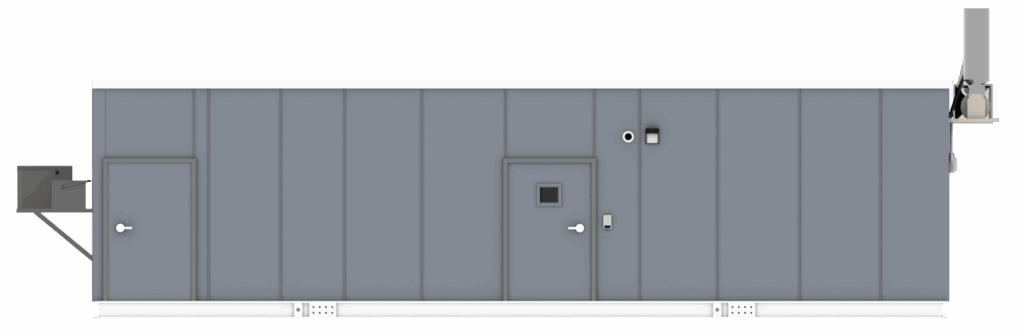
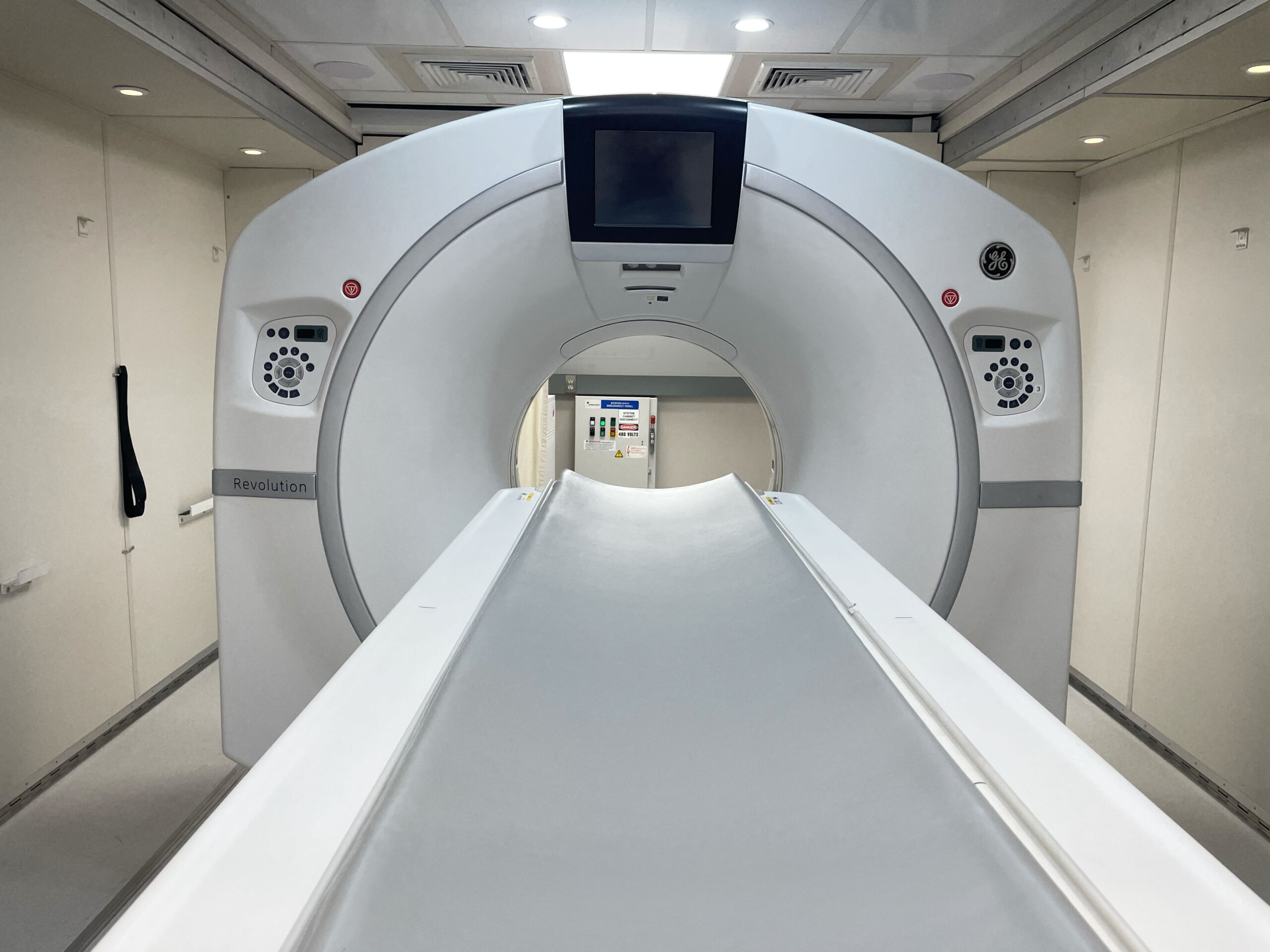
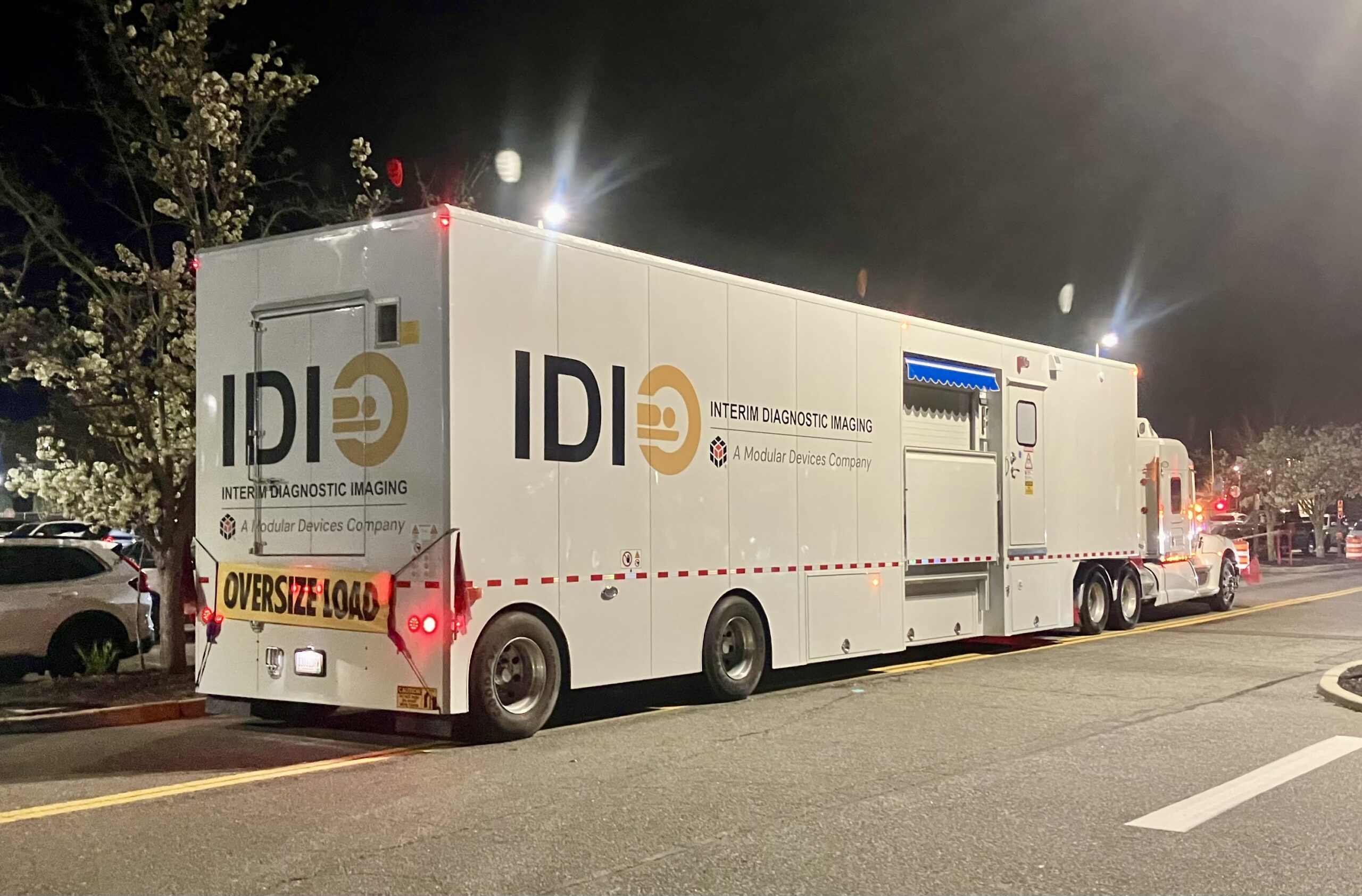
A mobile CT or MRI scanner is a fully equipped diagnostic imaging system housed within a purpose-built trailer and delivered to a healthcare facility as an on-site extension of the imaging department. These units are installed on location and operate as a fully functional imaging suite for the duration of the lease, whether used short-term or as part of a longer-term strategy.
Mobile CT and MRI scanners are commonly used to:
- Expand imaging capacity without permanent construction
- Maintain imaging services during renovations or equipment replacement
- Support temporary or long-term service line growth
- Extend access to advanced imaging in underserved or remote areas
From the patient and clinical team perspective, the experience mirrors that of a fixed imaging suite when the mobile solution is designed, installed, and supported correctly.
How Hospitals use Mobile CT and MRI in Practice
Expanding Capacity without Construction
With imaging volumes continuing to increase, hospitals often face bottlenecks driven by limited scanner availability rather than staffing or clinical demand. Mobile CT and MRI scanners allow hospitals to add immediate imaging capacity without waiting months—or years—for construction, permitting, and equipment installation.
This approach helps organizations respond quickly to demand while preserving capital and maintaining operational flexibility.
Ensuring Continuity during Renovations or Equipment Replacement
Modular cath labs are constructed off-site and installed on-site as semi-permanent structures. While still faster than traditional construction, modular solutions are typically used when longer deployment durations or integration into a broader facility expansion are required.
Planned renovations, equipment upgrades, or unexpected downtime can disrupt imaging services and delay patient care. Mobile scanners allow hospitals to maintain imaging operations throughout construction or transition periods.
For hospitals, this means:
- Avoiding patient backlogs
- Preserving referral relationships
- Protecting revenue during downtime
Supporting Long-Term Strategic Planning
Mobile imaging is no longer limited to short-term use cases. Many hospitals now deploy mobile CT and MRI scanners as part of multi-year strategies—supporting service line expansion, market testing, or phased growth while deferring major capital investments.
This model allows leadership teams to align imaging capacity with evolving reimbursement models, staffing availability, and patient demand.
Extending Access to Advanced Imaging
Mobile scanners play a critical role in expanding access to diagnostic imaging for rural hospitals, satellite campuses, and underserved communities. By bringing high-quality CT and MRI services directly to the point of care, providers can reduce patient travel time, shorten diagnostic timelines, and support earlier clinical intervention.
Why Mobile Imaging Quality and Support Matter
Not all mobile imaging solutions are created equal. The clinical and operational success of a mobile CT or MRI program depends heavily on equipment quality, system installation, and the level of service support provided throughout the lease.
Key considerations when choosing a mobile imaging provider include:
- OEM-sourced and factory-installed imaging systems
- Ongoing OEM service coverage during the life of the lease
- System uptime, image quality, and long-term reliability
- Technical training included with the lease, with short- or long-term staffing support available, if required
- Experienced teams that understand hospital workflows and compliance requirements
For hospitals that rely on mobile imaging as a core part of their operations, these factors directly influence patient experience, staff confidence, and financial performance.
In practice, hospitals use mobile CT and MRI scanners to add imaging capacity quickly, maintain continuity during operational disruptions, and extend access without permanent construction or large capital investment.
A Strategic Tool for Modern Imaging Environments
Mobile CT and MRI scanners have evolved into essential tools for hospitals navigating today’s complex healthcare landscape. When deployed thoughtfully and supported by high-quality equipment and experienced service teams, mobile imaging enables providers to expand access, maintain continuity, and plan for the future with confidence.
As imaging strategies continue to shift toward flexibility, scalability, and risk mitigation, mobile CT and MRI solutions remain a reliable and proven approach for meeting patient needs without sacrificing quality or operational control.