 Peptide compounding continues to attract attention across the pharmacy industry and from the U.S. Food and Drug Administration (FDA).
In July 2026, FDA convened its Pharmacy Compounding Advisory Committee (PCAC) to consider several peptide-related bulk drug substances for potential inclusion on the 503A Bulks List. The review included substances related to BPC-157, KPV, TB-500, MOTs-C, Emideltide (DSIP), Semax, and Epitalon.
For compounding pharmacies, these developments reinforce an important point: the regulatory landscape surrounding peptide compounding continues to evolve. Understanding which substances may be used is one part of the equation. Pharmacies also need to consider whether their facilities and compounding environments are prepared to support their operations as demand, formularies, and regulatory requirements change.
What Is FDA Reviewing?
Under Section 503A of the Federal Food, Drug, and Cosmetic Act, there are limits on the bulk drug substances that state-licensed pharmacists and physicians may use in compounding.
Generally, a bulk drug substance must:
- Comply with an applicable USP or National Formulary monograph, if one exists;
- Be a component of an FDA-approved drug if an applicable monograph does not exist; or
- Appear on FDA’s 503A Bulks List if neither of the first two conditions applies.
Bulk drug substances must also be accompanied by a valid certificate of analysis and manufactured by an establishment registered with FDA.
FDA continues to evaluate substances nominated for inclusion on the 503A Bulks List, including peptides. During its July 2026 PCAC meeting, the agency considered BPC-157-related substances, KPV-related substances, TB-500-related substances, MOTs-C-related substances, Emideltide-related substances, Semax-related substances, and Epitalon-related substances.
The evaluation is important because inclusion, or non-inclusion, on the 503A Bulks List can affect whether a pharmacy operating under Section 503A may compound using a particular bulk drug substance when the other statutory pathways do not apply.
Why is Peptide Compounding Receiving Increased Attention?
Peptides can present unique considerations related to their characterization and manufacture.
In its evaluation of certain peptide substances, FDA has raised concerns that can include peptide-related impurities, aggregation, immunogenicity, and challenges associated with adequately characterizing an active pharmaceutical ingredient. The specific concerns vary by substance, and FDA evaluates substances individually.
That distinction matters.
There is not one new FDA rule governing all peptide compounding. Instead, pharmacies need to pay close attention to the regulatory status of the individual bulk drug substances they use or are considering using.
For pharmacy leaders, that makes staying current with FDA actions increasingly important when evaluating existing or future peptide programs.
Peptide Regulation and Sterile Compounding Requirements are Separate Issues
FDA’s determination of whether a particular bulk drug substance may be used in compounding is separate from the requirements governing how sterile preparations are compounded.
When a pharmacy prepares compounded sterile preparations, the compounding environment must continue to meet applicable requirements and standards, including USP <797> and, when hazardous drugs are involved, applicable USP <800> requirements.
In other words, having an appropriate cleanroom does not determine whether a particular peptide is permissible for compounding—and the regulatory status of a peptide does not eliminate the need for an appropriate sterile compounding environment.
Both need to be considered.
Is Your Compounding Space Ready to Adapt?
The evolving peptide market raises another practical question for pharmacies: How quickly can your facility respond when your compounding operation changes?
A pharmacy may need additional sterile compounding capacity because of increased patient demand, the addition of new services, renovation of an existing pharmacy, or changes to its overall compounding strategy.
Traditional construction isn’t always the only option.
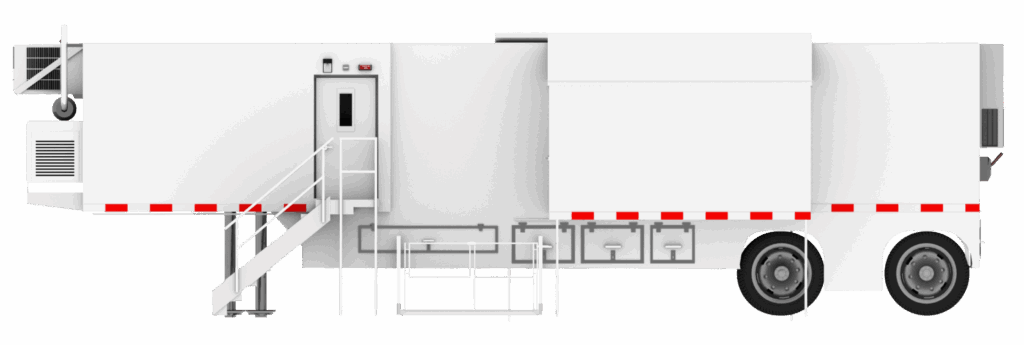
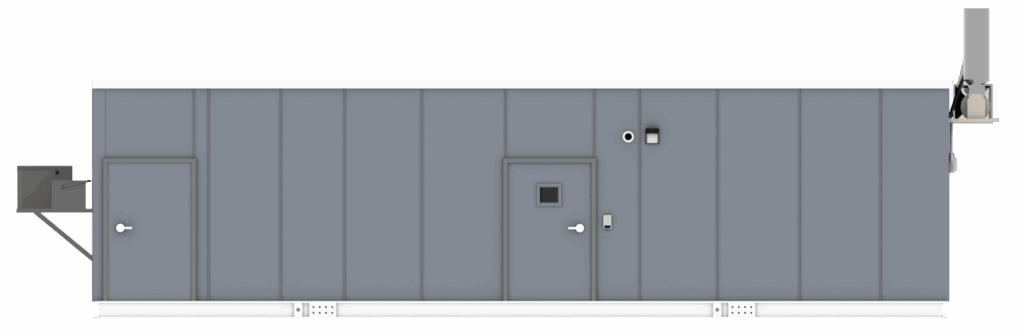
Mobile cleanrooms can provide pharmacies with a flexible way to add controlled compounding space without building a permanent addition or undertaking a major renovation.
Depending on the application, a mobile cleanroom can help a pharmacy:
- Add sterile compounding capacity
- Maintain operations during renovations or facility upgrades
- Address space constraints within an existing pharmacy
- Establish dedicated space for a growing compounding program
- Bridge the gap while a permanent facility is being planned or constructed
- Respond more quickly to changing operational requirements
For pharmacies evaluating peptide compounding or expanding an existing sterile compounding program, that flexibility can be particularly valuable in an environment where both demand and regulatory expectations continue to develop.
Mobile USP <797>/<800> Cleanrooms from Modular Devices
 Modular Devices provides mobile USP <797> and <800> cleanrooms available for lease, giving compounding pharmacies another option for adding compliant space without relying exclusively on permanent construction.
Our self-contained mobile cleanrooms are designed for rapid deployment and can support temporary, transitional, or longer-term compounding needs. Solutions can be configured around the requirements of the pharmacy and deployed at the facility, helping organizations expand capacity while minimizing disruption to existing operations.
The result is more than additional square footage. It’s the ability to build greater flexibility into a pharmacy’s facility strategy.
Preparing for What’s Next in Compounding
FDA’s ongoing evaluation of peptides demonstrates how quickly the compounding landscape can change.
For pharmacy leaders, preparation means looking at both sides of the equation: understanding the regulatory status of the substances being compounded and ensuring that the physical environment can support safe, compliant operations.
As peptide compounding continues to evolve, a flexible facility strategy can help pharmacies prepare for growth, changing demand and new operational requirements—without waiting for permanent construction to catch up.
Planning for additional compounding capacity?
Learn how Modular Devices’ mobile USP <797>/<800> cleanrooms can provide flexible, rapidly deployable space for your pharmacy compounding operation: https://www.modulardevices.com/cleanrooms/pharmacy-compounding/pharmacy-compounding-lease-fleet/